A comprehensive comparison of modern CMSs and static site generators for 2025, created by Niklas Stephan and his AI assistant.
The short version: the ranking of the best CMSs and static site generators
After a comprehensive analysis of 12 criteria, we identified clear winners:
- Hugo (52 points) – the performance champion
- Ghost (50 points) – the balanced alternative
- Jekyll (49 points) – the security expert
WordPress lands at only 38 points in 9th place – why? You will find out in our detailed analysis.
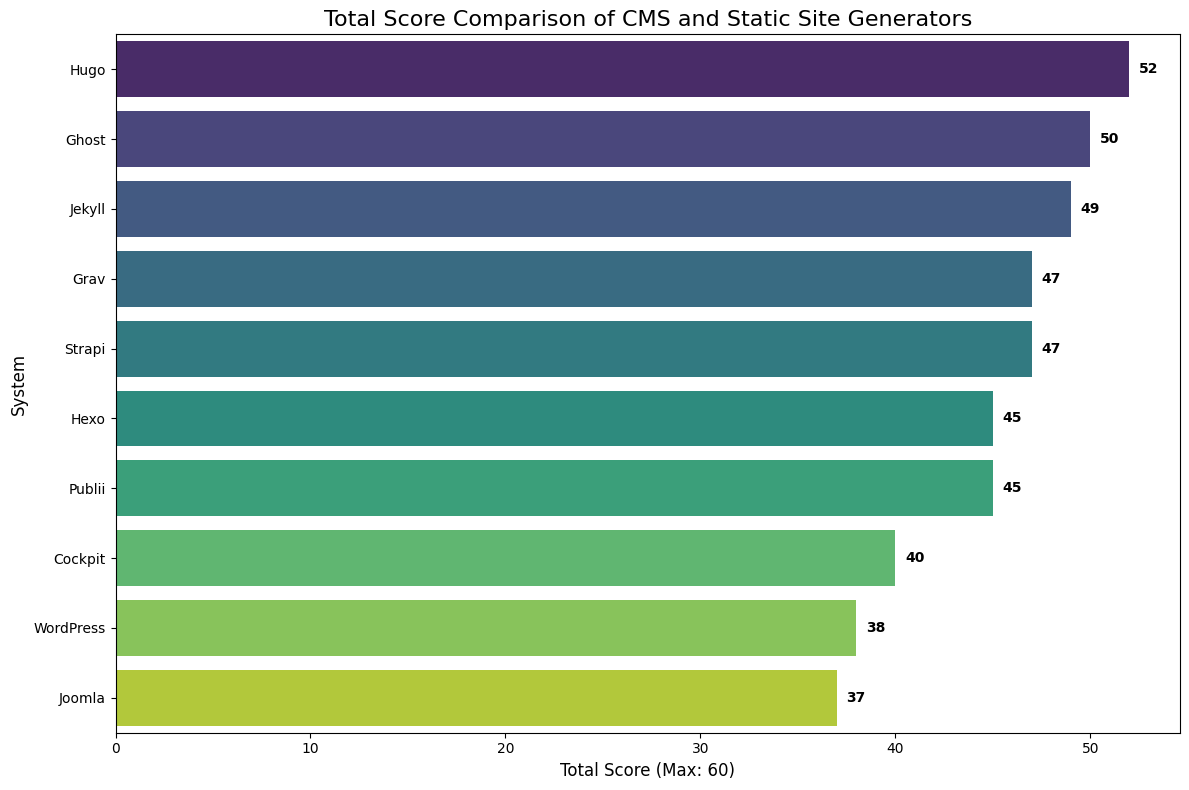
The comparison table in detail
| Criterion | Hexo | Grav | Strapi | Cockpit | Ghost | Publii | WordPress | Hugo | Jekyll | Joomla |
|---|---|---|---|---|---|---|---|---|---|---|
| Type(s) | ★★★★☆ | ★★★★☆ | ★★★☆☆ | ★★★☆☆ | ★★★★☆ | ★★★★☆ | ★★★★★ | ★★★★☆ | ★★★★☆ | ★★★★★ |
| Backend | ★☆☆☆☆ | ★★★★☆ | ★★★★★ | ★★★★☆ | ★★★★☆ | ★★☆☆☆ | ★★★★★ | ★☆☆☆☆ | ★☆☆☆☆ | ★★★★★ |
| Frontend | ★★★★☆ | ★★★☆☆ | ★★★☆☆ | ★★★☆☆ | ★★★★☆ | ★★★★☆ | ★★★☆☆ | ★★★★☆ | ★★★★☆ | ★★★☆☆ |
| File-based | ★★★★★ | ★★★★★ | ★☆☆☆☆ | ★★☆☆☆ | ★★★☆☆ | ★★★★★ | ★☆☆☆☆ | ★★★★★ | ★★★★★ | ★☆☆☆☆ |
| Docker ready | ★★★☆☆ | ★★★☆☆ | ★★★★★ | ★★★★☆ | ★★★★☆ | ★★★☆☆ | ★★★★☆ | ★★★★☆ | ★★★☆☆ | ★★★★☆ |
| Popularity | ★★★☆☆ | ★★★☆☆ | ★★★★☆ | ★★☆☆☆ | ★★★★☆ | ★★☆☆☆ | ★★★★★ | ★★★★☆ | ★★★★☆ | ★★★★☆ |
| Open source | ★★★★★ | ★★★★★ | ★★★★★ | ★★★★★ | ★★★★★ | ★★★★★ | ★★★★★ | ★★★★★ | ★★★★★ | ★★★★★ |
| Modern codebase | ★★★★☆ | ★★★★☆ | ★★★★★ | ★★★★☆ | ★★★★★ | ★★★★☆ | ★★☆☆☆ | ★★★★★ | ★★★★☆ | ★★☆☆☆ |
| Current code | ★★★★☆ | ★★★★☆ | ★★★★★ | ★★★★☆ | ★★★★★ | ★★★★☆ | ★★★★☆ | ★★★★★ | ★★★★☆ | ★★★★☆ |
| Security | ★★★★☆ | ★★★★☆ | ★★★★☆ | ★★★☆☆ | ★★★★☆ | ★★★★☆ | ★☆☆☆☆ | ★★★★★ | ★★★★★ | ★☆☆☆☆ |
| Performance | ★★★★☆ | ★★★★☆ | ★★★☆☆ | ★★★☆☆ | ★★★★☆ | ★★★★☆ | ★★☆☆☆ | ★★★★★ | ★★★★★ | ★★☆☆☆ |
| Clean frontend | ★★★★☆ | ★★★★☆ | ★★★★☆ | ★★★☆☆ | ★★★★☆ | ★★★★☆ | ★☆☆☆☆ | ★★★★★ | ★★★★★ | ★☆☆☆☆ |
What do the rating criteria mean?
- Type(s): versatility of the system (SSG, headless CMS, classic CMS)
- Backend: quality of the admin panel, API and user management
- Frontend: flexibility in themes, templates and API output
- File-based: works with files instead of a database (Markdown, flat-file)
- Docker ready: simplicity of container deployment
- Popularity: size of the community and adoption
- Open source: full source availability
- Modern codebase: use of current technologies and best practices
- Current code: activity of development and updates
- Security: safety against attacks and exploits
- Performance: loading speed and resource efficiency
- Clean frontend: quality of the generated HTML/CSS/JS code
The three system categories compared
Static site generators: the performance champions
Advantages:
- Outstanding security (no database = smaller attack surface)
- Lightning-fast loading times through static files
- Clean, lean code without bloat
- More cost-effective hosting possible
Top recommendations:
- Hugo (52 points): lightning-fast, secure, with clean code output
- Jekyll (49 points): the classic with outstanding security
- Hexo (45 points): flexible generator based on Node.js
Disadvantages: weaker backend, requires more technical know-how
Modern CMSs: the balanced middle
Advantages:
- Balance between usability and technical quality
- Modern codebase with current technologies
- Better security than traditional CMSs
Top recommendations:
- Ghost (50 points): perfectly balanced, without significant weaknesses
- Strapi (47 points): leading headless CMS with excellent backend
- Grav (47 points): file-based CMS with a modern approach
Disadvantages: partly lower adoption and smaller plugin ecosystem
Traditional CMSs: the popularity giants
Advantages:
- Huge ecosystem of plugins and themes
- Extensive community and support
- Easy entry for beginners
Representatives:
- WordPress (38 points): market leader with a large ecosystem
- Joomla (37 points): alternative with similar characteristics
Disadvantages: significant security problems, poor performance, unclean code
The strengths and weaknesses of the top systems
Hugo: the technical leader
Strengths:
- Lightning-fast generation (up to 100x faster than other SSGs)
- Outstanding security through static files
- Extremely clean output code
- No database needed
Weaknesses:
- Minimalist backend (1★)
- Steeper learning curve for newcomers
Ghost: the balanced alternative
Strengths:
- Modern, intuitive backend
- Outstanding editor experience
- Good performance and security
- No significant weaknesses (at least 3★ in all categories)
Weaknesses:
- Lower adoption than WordPress
- Fewer themes and plugins available
WordPress: the popular problem case
Strengths:
- Largest ecosystem of plugins and themes
- Highest adoption and community
- Easy entry for beginners
Weaknesses:
- Critical security problems (1★)
- Poor performance (2★)
- Unclean frontend code (1★)
- Outdated codebase (2★)
Conclusion: time for a switch?
The analysis shows clearly: modern alternatives offer significant technical advantages over WordPress and Joomla. Especially in the critical areas of security, performance and code quality, the traditional CMSs fall clearly behind.
Our recommendations:
- For new projects: go with Hugo, Jekyll or Ghost
- For existing WordPress sites: consider a migration to Ghost or Grav
- For complex applications with API requirements: Strapi offers an excellent backend
The decision should ultimately depend on your specific requirements – but one thing is clear: there are better alternatives than WordPress today. I myself have meanwhile migrated https://niklas-stephan.de to Hugo and may report on that in detail in a separate post.
Do you have questions or remarks about migrating from WordPress to a modern alternative? Use the comment function to share your thoughts with us.